Jungfraujoch Altitude: 3,454 Metres and Your Body
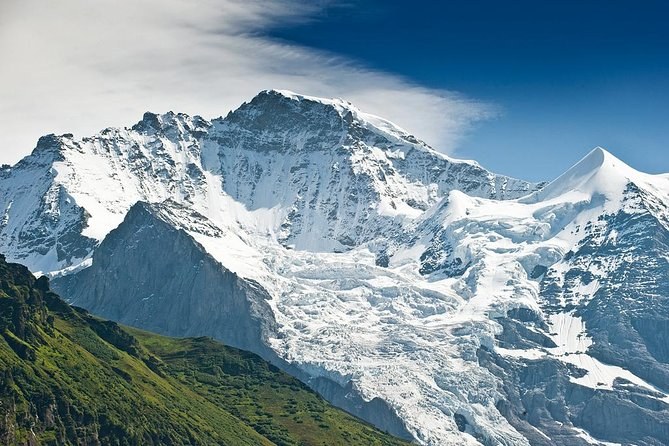
The Jungfraujoch station stands at 3,454 metres, and the trains take you there from the valley in about an hour. For most healthy people that is harmless. For some it is not, and Jungfrau Railways publishes its own list of who should think again. This guide sets out how high you go, how fast, who is advised not to go, and what to do if you feel unwell at the top. It is not medical advice: if in doubt, ask your doctor before you book.
How high is the Jungfraujoch?
The railway station is at 3,454 metres, the highest in Europe. The Sphinx terrace above it, reached by a lift that climbs 108 metres in 25 seconds, is at 3,571. The Mönchsjoch Hut, a 45-minute walk across the glacier, is at 3,658.
For comparison, Grindelwald village sits at about 1,034 metres and Mürren at 1,650. On the way up you pass Kleine Scheidegg at 2,061 metres, Eigergletscher at 2,320 and, inside the Eiger, Eismeer at 3,160.
| Place | Altitude | What happens there |
|---|---|---|
| Grindelwald village | About 1,034 m | The valley, where most tours start up |
| Mürren | 1,650 m | A car-free village across the valley |
| Kleine Scheidegg | 2,061 m | The cogwheel line's high point |
| Eigergletscher | 2,320 m | Change to the Jungfrau Railway |
| Where altitude sickness can begin | About 2,500 m | Jungfrau Railways' threshold |
| Eismeer | 3,160 m | A window station inside the Eiger |
| The station | 3,454 m | Where you step off the train |
| Sphinx terrace | 3,571 m | The lift from the station |
| Mönchsjoch Hut | 3,658 m | A 45-minute walk each way |
How fast do you climb?
Fast. Jungfrau Railways says the top can be reached in 45 to 50 minutes from Grindelwald: 15 minutes by the Eiger Express to Eigergletscher, then 26 minutes on the Jungfrau Railway. That is about 2,400 metres of climb in under an hour.
A rapid rise is one of the known risk factors for altitude sickness. The slower cogwheel route through Kleine Scheidegg takes longer, but it is still well over 2,000 metres of climb in a morning.
Will you feel the altitude?
Probably a little. The air pressure is lower, and so is the oxygen your body takes in. Jungfrau Railways says this is usually harmless for healthy people, whose bodies compensate. You may notice you are short of breath on stairs, or tired more quickly than usual.
Acute altitude sickness is different. Jungfrau Railways says it can develop from 2,500 metres, and its symptoms can include headaches, dizziness, nausea and tiredness. Being fit does not protect you from it.
Who is advised not to go up?
Jungfrau Railways' own guidance says these people should not travel to the Jungfraujoch, or should ask a doctor first:
- Should not go: anyone who has recently had a stroke or a brain haemorrhage; heart and lung patients who are short of breath on light exertion, such as climbing stairs.
- Should not go: patients with severe asthma or severe COPD, impaired lung function, or sudden breathing problems.
- Should ask a doctor: anyone with a strong risk profile for heart disease, such as smoking, high blood pressure, diabetes, obesity or occasional chest pain.
- Should ask a doctor: anyone with long-term breathing difficulties, or certain blood disorders with anaemia.
- Should wait: anyone with a cold or a fever, who may struggle to equalise pressure.
- Should ask a doctor: dialysis patients with renal insufficiency, for whom the limits on how much they can drink become a problem at altitude.
Patients who have had successful surgery on the coronary arteries and are fully fit in the lowlands may go after talking to their doctor.
Is it higher than the other Swiss summit trips?
Yes. The Schilthorn above Mürren stands at 2,970 metres, and Titlis above Engelberg at just over 3,000. The Jungfraujoch station is roughly 450 metres higher than the Schilthorn, and the Sphinx terrace higher again. All three sit above the 2,500 metres where Jungfrau Railways says altitude sickness can begin.
So if you have felt fine on those summits, that is a good sign, but not a guarantee. If you felt unwell on either, take that seriously here. The three are compared in Jungfraujoch vs Schilthorn vs Titlis.
What about babies and toddlers?
Jungfrau Railways advises against taking children under 2. They often cannot equalise pressure fully, and they tend to drink too little. That is the railway's own advice, and several tours repeat it.
Older children can go up, and those up to 5 travel free. Children chill faster than adults, so pack an extra layer, a hat and gloves for them. The Jungfraujoch with kids post covers the day in detail.
Is it safe during pregnancy?
Jungfrau Railways advises against the trip from the 7th month of pregnancy, and for any high-risk pregnancy. Earlier in a normal pregnancy, speak to your doctor or midwife before you book.
What do cold and sun do at 3,454 metres?
Both are stronger than you expect. MeteoSwiss's long-term averages at the station range from −13.3 °C in February to 0.6 °C in August, so frost is normal even in summer. Jungfrau Railways recommends dressing in layers, with a warm jacket, closed shoes, a hat and gloves.
The sun is fierce on the snow. The railway warns of a real risk of snow blindness on the glacier without sunglasses, even in bad weather, and says good sunscreen is essential.
How do you keep it gentle?
- Drink. At this altitude you lose about 200 millilitres of fluid an hour through breathing. Drink water or tea.
- Slow down. Stress and hurry make you sweat and lose more fluid. Walk, do not run.
- Skip the beer. The railway advises against too much alcohol and nicotine on the day.
- Sleep lower first. A night in Interlaken or Grindelwald before you go up gives you a rested start. The 2-day tour from Zurich builds that in.
- Go at your own pace. On a private day, your guide waits for you.
Which tours suit a slower pace?
Any tour reaches the same height, so no tour removes the altitude. What differs is how much you rush. On a coach day from a city you spend four hours or more on the road, then climb 2,400 metres in under an hour, on the group's clock.
The 2-day tour from Zurich splits that up: a free afternoon and a night in Interlaken or Grindelwald, with breakfast, then the summit on the morning of day two. The private day from a Zurich hotel lobby takes up to 7 people with their own guide and pauses at the Eismeer window inside the Eiger on the way up, though Jungfrau Railways says that stop cannot always be guaranteed. The private day from Interlaken travels by public train and gives you about 3 hours at the top at your own speed.
If you want no group at all, the railway's own return from Interlaken Ost lets you stop, sit and drink whenever you like, with 3 hours before your train down.
What should you do if you feel unwell at the top?
Go down. Jungfrau Railways' advice is simple: if acute altitude sickness sets in, descend quickly. Sit down, drink, tell your guide or the station staff, and take the next train.
Do not try to push on to the Mönchsjoch Hut or the Snow Fun Park if you have a headache or feel dizzy. Both add effort, and the hut adds another 200 metres of climb.
Can a wheelchair user reach the top?
Yes, by one route. Jungfrau Railways says the route from Interlaken Ost to Grindelwald Terminal, the Eiger Express, Eigergletscher and the Jungfraujoch is barrier-free. The route through Kleine Scheidegg needs a phone booking in advance.
The group coach days here are not marked wheelchair accessible. Some Zurich private days and the small-group day by train from Bern are.
A checklist before you go
- Check the list above; if any line fits you, see a doctor first.
- Leave children under 2 in the valley.
- Pack a warm jacket, closed shoes, a hat, gloves, sunglasses and sunscreen.
- Carry water, and drink it.
- Stay off a cold or a fever: move your date instead.
- Know the way down: the next train, every 30 minutes.
Frequently asked questions
Do people get altitude sickness at the Jungfraujoch?
Can you take a baby to the Jungfraujoch?
Can you go up while pregnant?
Can you go up with a heart condition?
How high is the Jungfraujoch?
What should you wear at the top?
Is the Jungfraujoch wheelchair accessible?
Where these facts come from
- Jungfrau Railways: frequently asked questions (fares, children, seat reservations, medical advice, accessibility)
- Jungfrau Railways: frequently asked questions (children, medical advice, barrier-free travel)
- Jungfrau Railways: Jungfraujoch – Top of Europe
- Jungfrau Railways: the Sphinx Observation Deck
- Jungfrau Railways: hike to the Mönchsjoch Hut
- Jungfrau Railways: the Eiger Express
- Jungfrau Railways: Kleine Scheidegg
- Jungfrau Railways: Eismeer station
- Jungfrau Railways: Mürren
- MeteoSwiss: homogeneous monthly series, station Jungfraujoch (JUN)
- Wikipedia: Grindelwald
- Wikipedia: altitude sickness
Days that keep the altitude gentle
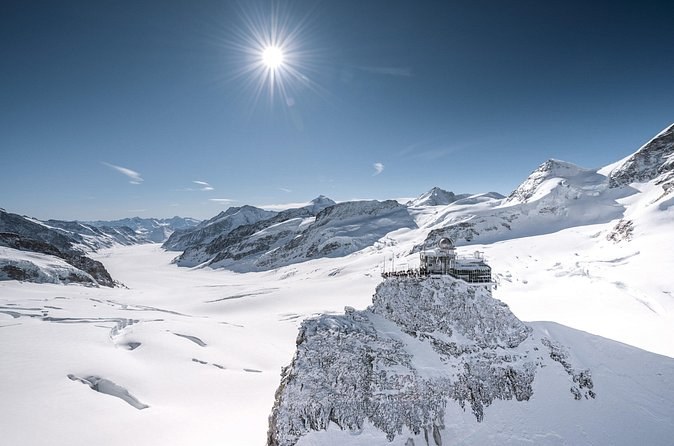
2-Day Jungfraujoch Top of Europe Tour from Zurich: Interlaken or Grindelwald
Two days from Zurich with a hotel night and breakfast, and the summit on the morning of day two.
From $645 per person
Check Availability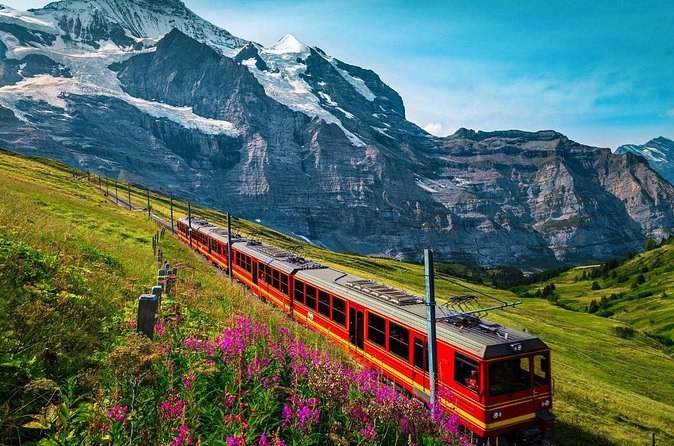
Jungfraujoch Private Tour Top of Europe and Lauterbrunnen Valley
Your own driver-guide from a Zurich hotel, for up to 7, with about 3 hours across the summit and an hour in the valley.
From $919 per person
Check Availability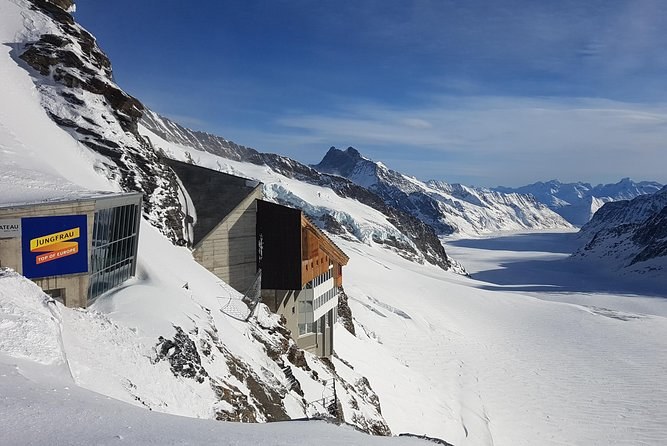
Jungfraujoch Top of Europe Private Day Trip from Interlaken
Hotel pickup in Interlaken and your own guide, with about 3 hours at the Jungfraujoch.
From $937 per person
Check AvailabilityNext: Ready to go up? Compare every tour, from the gentlest to the longest, on Jungfraujoch Tours.